Test Index
Electrostatic Potential and Capacitance
Electrostatic Potential and Capacitance

 CBSE Board Videos
© examsnet.com
Question : 8 of 28
Marks:
+1,
-0
In the circuit shown, the charge on the left plate of capacitor is . The charge on the right plate of the capacitor is :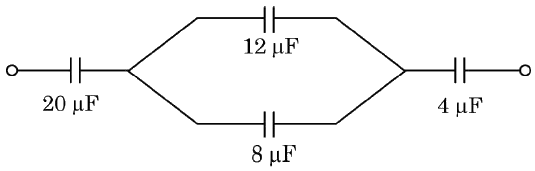
[CBSE 2025 55/7/3]
Solution: 👈: Video Solution
Concept:The two plates of a capacitor carry equal and opposite charges. Capacitors in parallel have the same potential difference, so they share the charge in the ratio of their capacitances ().Solution:1. Left plate of = , so its right plate = .2. The junction after it is isolated (its total charge stays zero), so the left plates of the and capacitors together carry .3. Same voltage across both: , 4. Left plate of = , so its right plate = .Key point: is the charge on the left plate; the right plate carries the opposite sign.Answer:Option C ()
© examsnet.com
Go to Question: