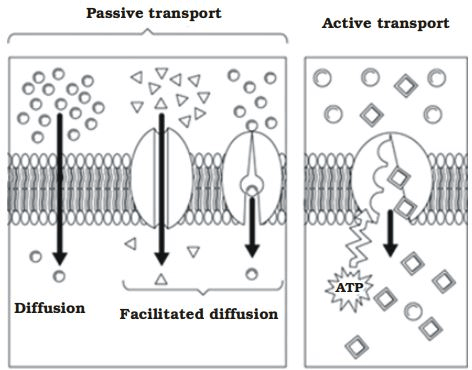
Cells need to constantly pump in and pump out various ions and small molecules that play important roles in the metabolic activities of a cell. All this transport occurs through the cell membrane, and is highly regulated. Active transport occurs against concentration gradient, but requires energy, usually in the form of ATP. When energy released from ATP hydrolysis is used up directly for the transport of material, it is called primary active transport. Secondary active transport occurs when the movement of certain molecules down the concentration gradient powers the movement of other molecules against the concentration gradient. For example, certain glucose transporters transport glucose into the cell against its gradient, by allowing a sodium molecule to get in as well.