Test Index
CBSE Class 12 Biology 2023 Paper 57/3/1
CBSE Class 12 Biology 2023 Paper 57/3/1


© examsnet.com
Question : 30 of 33
Marks:
+1,
-0
The diagram shows the life cycle of a pathogenic protozoan.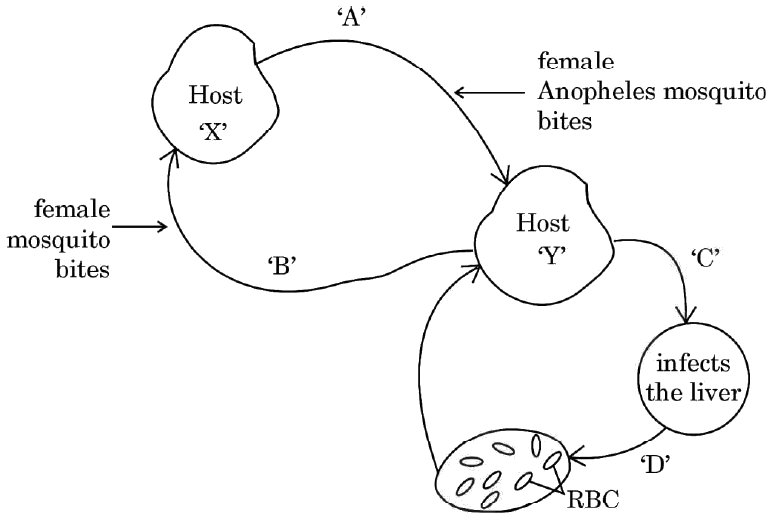 (i) Name the parasitic stage that is being transferred from host ‘X’ to host ‘Y’. (1)(ii) Write the changes the parasite undergoes in the liver. (1)(iii) Write the changes the parasite undergoes when it enters the RBC. (1)(iv) (a) Trace the changes the parasite undergoes when the host ‘X’ takes its blood meal from infected host ‘Y’. (1)OR(iv) (b) At which stage during the life cycle of the pathogen does the host ‘Y’ experience the symptoms of the disease ? Name the disease and the toxic substance responsible for these symptoms. (1)
Solution:
The diagram is the life cycle of the malarial parasite Plasmodium; host X is the female Anopheles mosquito and host Y is the human.(i) Sporozoites, the infective stage, are transferred from the mosquito (X) into the human (Y) through the bite of the female Anopheles (stage 'A').(ii) In the liver, the sporozoites enter the liver cells and multiply asexually; the liver cells then burst and release the parasites (merozoites) into the blood.(iii) In the red blood cells the parasites again reproduce asexually and increase in number, bursting the RBCs. Some of the parasites in the RBCs then change into gametocytes (sexual stages).(iv)(a) When the female mosquito (X) takes a blood meal from an infected human (Y), the gametocytes enter the mosquito. In the mosquito's stomach (gut) the gametes form and fertilisation takes place; the zygote develops further in the stomach wall, and the sporozoites formed move to the salivary glands. These sporozoites are the infective stage passed on at the next bite.OR (iv)(b) The symptoms are felt at the stage of bursting of the RBCs (release of parasites from the RBCs). The disease is malaria, and the toxic substance released is haemozoin, which causes the chill and high fever recurring every three to four days.
© examsnet.com
Go to Question: