Test Index
Application of Derivatives
Application of Derivatives

 CBSE Board Videos
© examsnet.com
Question : 26 of 45
Marks:
+1,
-0
Case Study – 3Sooraj's father wants to construct a rectangular garden using a brick wall on one side of the garden and wire fencing for the other three sides as shown in the figure. He has 200 metres of fencing wire.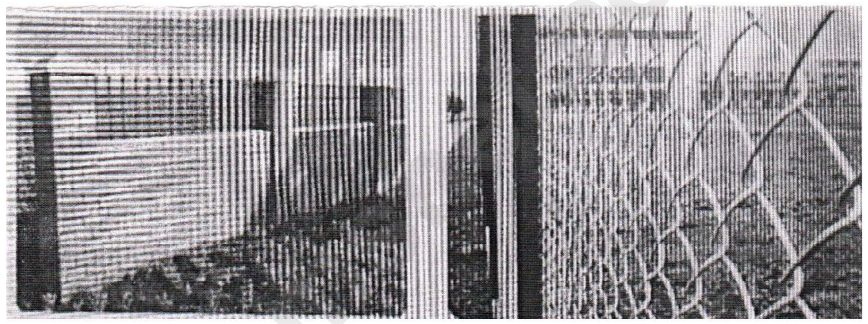 Based on the above information, answer the following questions :(i) Let 'x' metres denote the length of the side of the garden perpendicular to the brick wall and 'y' metres denote the length of the side parallel to the brick wall. Determine the relation representing the total length of fencing wire and also write A(x), the area of the garden. (2)(ii) Determine the maximum value of A(x). (2)
[CBSE 2023 65/4/3]
Solution:
(i)The wire covers the two sides perpendicular to the wall (each m) and the side parallel to the wall ( m); the fourth side is the brick wall.Total length of fencing wire: , so .Area of the garden: (ii), so is maximum at .Then andResult: Maximum area (when m, m).
© examsnet.com
Go to Question: