Test Index
Triangles
Triangles

 CBSE Board Videos
© examsnet.com
Question : 38 of 83
Marks:
+1,
-0
In the given figure, in , . If cm, cm and cm, then the length of AC is :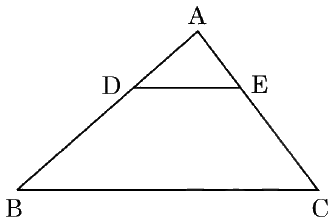
[CBSE 2024 Standard 30/5/3]
Solution:
Concept:Basic Proportionality Theorem: if , then .Solution: cm cmKey point: cm is only ; the question asks for the whole side .Answer:Option C ( cm)
© examsnet.com
Go to Question: