Test Index
Surface Areas and Volumes
Surface Areas and Volumes

 CBSE Board Videos
© examsnet.com
Question : 26 of 51
Marks:
+1,
-0
A juice seller was serving his customers using glasses as shown in the figure. The inner diameter of the cylindrical glass was 5.6 cm, but the bottom of the glass had a hemispherical raised portion which reduced the capacity of the glass. If the height of the glass was 10 cm, find the apparent capacity and the actual capacity of the glass.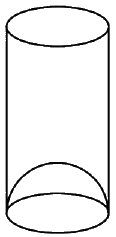
[CBSE 2024 Standard 30/5/3]
Solution:
Given: Inner diameter cm, so cm; height cmApparent capacity (whole cylinder):Volume of the hemispherical raised portion:Actual capacity = apparent capacity volume of hemisphereResult: Apparent capacity ; actual capacity (about mL).
© examsnet.com
Go to Question: