Test Index
Probability
Probability

 CBSE Board Videos
© examsnet.com
Question : 60 of 74
Marks:
+1,
-0
Case Study – 3Computer-based learning (CBL) refers to any teaching methodology that makes use of computers for information transmission. At an elementary school level, computer applications can be used to display multimedia lesson plans. A survey was done on 1000 elementary and secondary schools of Assam and they were classified by the number of computers they had.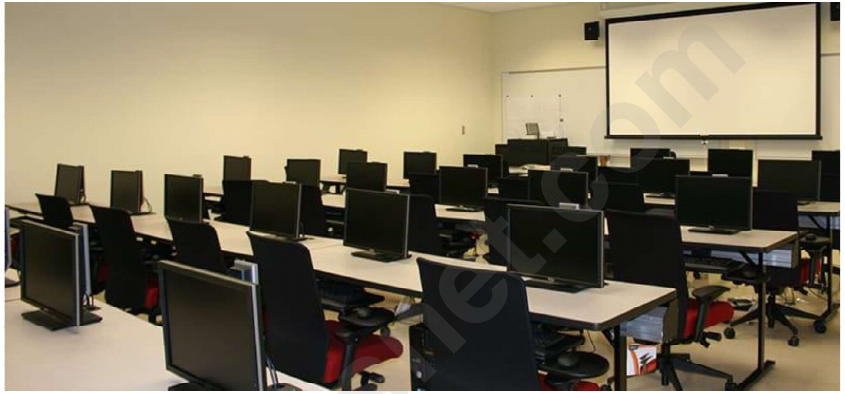
One school is chosen at random. Then :(i) Find the probability that the school chosen at random has more than 100 computers. [1](ii) (a) Find the probability that the school chosen at random has 50 or fewer computers. [2]OR(ii) (b) Find the probability that the school chosen at random has no more than 20 computers. [2](iii) Find the probability that the school chosen at random has 10 or less than 10 computers. [1]
| Number of Computers | 1 – 10 | 11 – 20 | 21 – 50 | 51 – 100 | 101 and more |
| Number of Schools | 250 | 200 | 290 | 180 | 80 |
[CBSE 2023 Standard 30/2/1]
Solution:
Total number of schools (i)More than 100 computers (101 and more): 80 schools (or )(ii)(a)50 or fewer computers (1–10, 11–20, 21–50): schools (or )OR (ii)(b)No more than 20 computers (1–10, 11–20): schools (or )(iii)10 or less than 10 computers (1–10): 250 schools (or )
© examsnet.com
Go to Question: